Home › Industrial Floors and Specialty Slabs
Meet demanding performance requirements with industrial floors and specialty slabs in Lexington, KY. We install high load slabs, superflat floors, and temperature controlled space slabs for manufacturing, food processing, and storage. Our work follows strict tolerances and includes reinforcement, jointing, and finishes matched to your operations.
Superior Concrete Lexington provides professional industrial concrete floor throughout Lexington, KY, Kentucky and the surrounding area. Our licensed, insured crew delivers safe, clean, on-time work with a free estimate before anything begins. Call (859) 710-8754 or request your free quote.
Industrial Concrete Floors Built for Lexington Workloads
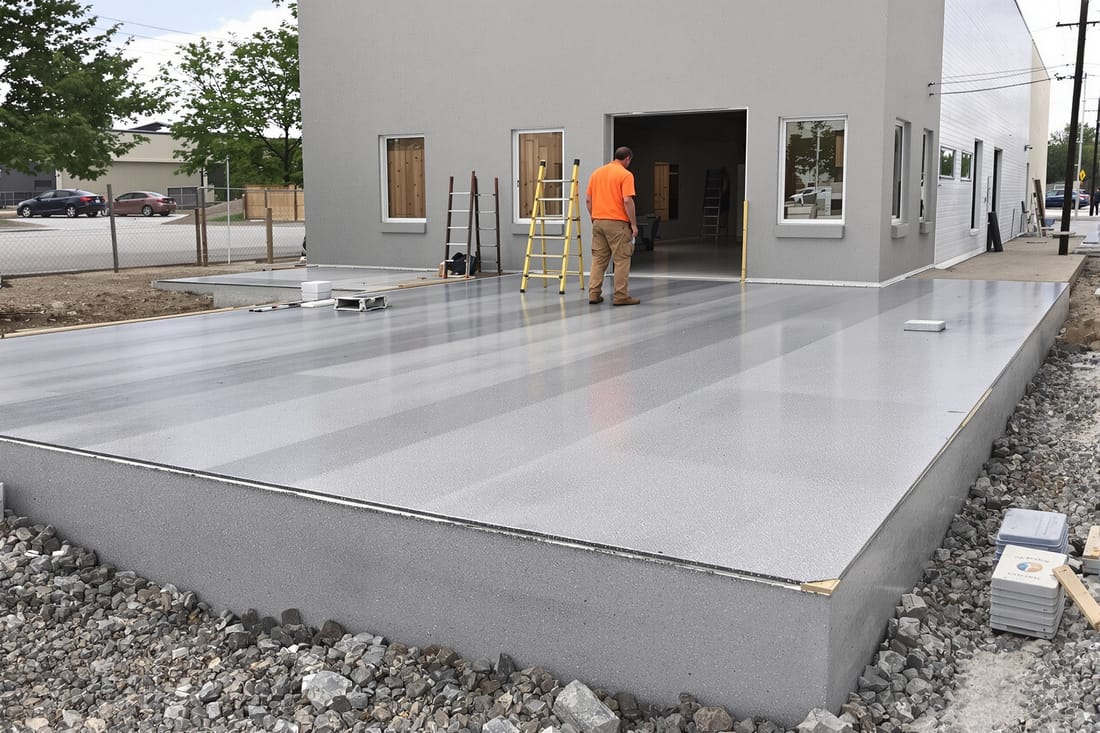
Industrial concrete floors in Lexington have to deal with a lot. Forklift traffic, pallet jacks, chemical spills, temperature swings, and the constant dust from manufacturing and warehousing all stress the slab. At Superior Concrete Lexington, we design each industrial floor and specialty slab around the way your specific operation actually uses the space, not just a generic warehouse template.
Our team starts by walking the site with you and asking very practical questions. What equipment runs here and how heavy is it. Do you use steel-wheeled carts or rubber tires. Will you install racking that concentrates loads on small points. Are you washing the floor daily or running high heat processes. For distribution centers along I-75 and smaller shops inside New Circle Road, these answers directly drive slab thickness, reinforcement type, joint layout, and surface hardening.
We routinely pour and finish industrial concrete floors for manufacturing plants, trucking terminals, cold storage, breweries, light industrial flex spaces, and agricultural facilities around the Lexington area. Each of these has different needs. A bottling plant cares about slip resistance and drainage, a machine shop cares about vibration control and oil resistance, while a logistics warehouse wants tight flatness tolerances so forklifts and order pickers move safely at speed.
When you work with Superior Concrete Lexington, you get a floor that is engineered to your loads and workflow so you are not dealing with cracked panels, curling joints, or dusting surfaces a few years after you move in.
How We Design Industrial Floors and Specialty Slabs
Good industrial floors are engineered first and poured second. We begin with a site and soil review. In Fayette County, subgrade conditions can change quickly from firm clay to fill material, especially on redeveloped commercial sites. We check geotechnical reports when available or coordinate with a local engineer to confirm bearing capacity and the need for proof rolling, undercutting, or stabilization.
Next, we determine slab thickness and reinforcement. Lighter duty storage and assembly areas might be best served with a 5 to 6 inch slab, while heavy forklift traffic, tall rack systems, and industrial processing often need 7 to 8 inch or thicker sections. Reinforcement can be traditional rebar, welded wire mesh, or steel and synthetic fibers blended into the concrete. Fibers reduce random cracking and improve impact resistance, which is particularly useful in facilities where pallets are frequently dropped or dragged.
We also plan the joint layout in detail. Control joints and construction joints are placed to manage where the slab wants to crack. For very high traffic or very flat specialty slabs, we may recommend doweled joints or even extended joint spacing with higher reinforcement so forklifts do not have to constantly cross joints. For floors used with very narrow aisle racking, we coordinate slab flatness and levelness tolerances with your racking supplier.
All of these design choices are documented so that the slab can pass any required structural review and so you know your floor is not just poured to a guess but tailored to your industrial use and Lexington site conditions.
Preparation, Pouring, and Finishing: What Actually Happens on Site
Industrial concrete floors succeed or fail on the preparation. Superior Concrete Lexington begins by establishing final elevations and drainage slopes so water does not pond in traffic lanes or under equipment. We grade and compact the subbase, then typically place a layer of compacted crushed stone to create a stable, well-drained platform. If there is any concern about moisture from below, especially for facilities located in lower areas or near creeks, we include an appropriate vapor barrier.
Formwork and edge details come next, including thickened slabs at column lines, door openings, dock levelers, and areas where heavy equipment will sit. We set dowels, keyways, and any embedded items, such as anchor bolts, conduit, and floor drains, so they finish flush with the surface. This step is coordinated with your electrician, plumber, and racking installers to avoid conflicts later.
On pour day, we control mix design and placement carefully. For industrial concrete floors we typically use a higher strength mix with a low water to cement ratio for durability. In hot Kentucky summers we may adjust set times and schedule earlier pours to avoid rapid drying and plastic shrinkage cracking. We use laser screeds or advanced screeding methods to achieve the specified flatness and levelness, then power trowels to finish.
If the design calls for it, we integrate dry-shake hardeners or specialty toppings during finishing. These can significantly increase surface hardness and abrasion resistance in loading docks, traffic aisles, and manufacturing cells. Joints are cut or tooled at the correct time, then filled with semi-rigid fillers where forklift traffic is expected so wheels do not chip the joint edges. Finally, we apply curing compounds or wet curing methods that allow the slab to gain strength evenly, which is essential for long-term performance.
Specialty Slabs: Heavy Loads, Chemicals, and Unique Uses
Specialty slabs are industrial floors that solve a specific challenge. Superior Concrete Lexington designs and installs these for facilities across Lexington and the surrounding counties where standard flooring will not hold up.
For heavy machinery pads and isolated equipment foundations, we thicken the slab, increase reinforcement, and often decouple the pad from the surrounding floor to control vibration. This matters for CNC machines, presses, and sensitive equipment used in advanced manufacturing and labs around the University of Kentucky tech corridor. We also coordinate anchor bolt locations and conduits so everything lines up during equipment installation.
Chemical-resistant slabs and coatings are important for food processing, automotive service centers, breweries, and facilities using solvents or acids. The base slab is engineered for structural performance, then we help you choose compatible toppings or coatings, such as epoxy, urethane cement, or other specialty systems. Good detailing around drains, sumps, and wash areas is critical so chemicals do not penetrate at weak points.
Cold storage and freezer slabs must address frost heave and condensation. This often means subslab insulation, vapor control, and sometimes under-slab heating or ventilation systems. If you are building or converting space in Lexington for cold storage, planning the slab correctly from the beginning can prevent severe structural and operational problems later.
We also install conductive and static dissipative slabs where electronics or flammable vapors are a concern, as well as sloped slabs with trench drains for wash-down and sanitation. Each specialty slab is designed so that structure, reinforcement, joints, and coatings all work together for the exact use you have planned.
Local Codes, Permits, and Common Problems We Prevent
In Lexington, industrial concrete floor projects usually require building permits and inspections through the Lexington-Fayette Urban County Government. Superior Concrete Lexington coordinates with your general contractor, engineer, or architect so slab designs meet local code and any additional insurance or industry requirements, such as FM or USDA guidelines where applicable.
Plan review may look at slab thickness, reinforcement, and vapor barriers, particularly for occupied industrial and commercial spaces. We provide mix designs and reinforcement details that are clear for review and inspection. During construction, inspectors may check subgrade prep, reinforcement placement, and vapor barrier installation before the pour. Our crews are used to this process and schedule work to keep your project moving without delays.
Many of the problems we see in older Lexington industrial floors are preventable. Common issues include cracks that mirror poor joint layouts, slab curling at joints because of uneven curing, spalled joint edges from repeated forklift traffic, and moisture-related coating failures. By focusing on subbase quality, controlled curing, proper joint spacing and detail, and the right combination of reinforcement and surface treatment, we substantially reduce the risk of these failures.
If you already have a problem floor and are expanding or renovating, we can evaluate the existing slab, perform test cuts, and design tie-ins or overlay systems that respect what is already there. This prevents new work from being compromised by older construction and keeps your facility functioning during improvements.
Pricing, Scheduling, and What to Ask Before You Hire
Industrial concrete floors and specialty slabs are an investment, and understanding what drives cost helps you compare proposals fairly. The main cost factors are slab thickness, reinforcement type and density, mix design strength, surface hardeners or specialty toppings, flatness requirements, subgrade remediation, and the complexity of layout and embedded items.
A simple 5 inch slab-on-grade for light industrial use will cost less per square foot than an 8 inch floor with steel fibers, dry-shake hardener, tight flatness tolerances, and multiple thickened equipment pads. Lexington sites that require removal of unsuitable fill or undercutting and replacement of soft soils will add to the budget but are crucial to avoid long-term settlement and cracking.
Schedule is another important factor for industrial clients. Superior Concrete Lexington plans pours around plant operations, material deliveries, and the curing time required before you can place racks, equipment, or heavy traffic on the slab. For example, you may be able to walk on the slab the next day, but forklifts and heavy loads generally require at least several days to a week or more, depending on the design strength and environmental conditions.
When you are comparing contractors for an industrial concrete floor in Lexington, ask for details about slab thickness, mix design, reinforcement type, joint layout, curing approach, and any included hardeners or coatings. Ask who is responsible for flatness testing and what tolerances they are meeting. A detailed, transparent scope from Superior Concrete Lexington helps you avoid low bids that quietly omit critical elements and leave you with higher maintenance costs and operational headaches later.